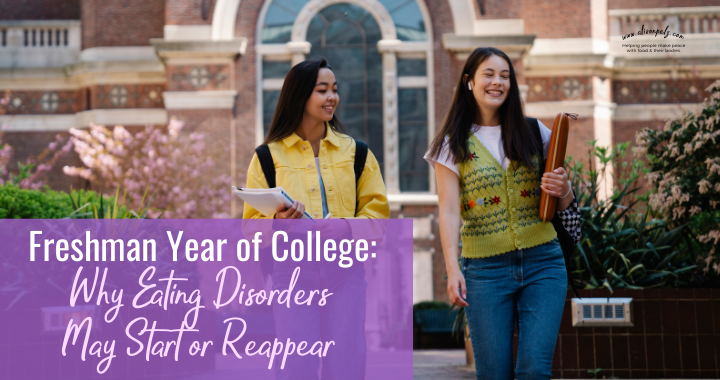
The first year of college is often described as a thrilling new chapter—freedom, independence, new friends, late-night pizza, dorm life, and so much possibility. For many students, this first year is fun and exciting. But it’s also filled with major transitions—many of which are invisible until you’re in them. And for students with a history of disordered eating, or even those without, the shift can be enough to stir up or intensify existing eating disorders and their symptoms.
The Perfect Storm of Change
Think about the months, even years, leading up to college: there’s pressure to get in, choose the “right” school, imagine your dream experience, and count down to this next life stage. Students often hear, “These will be the best years of your life.” That narrative leaves little room for the complicated, and very real, emotional reality of freshman year.
Starting college means stepping away from nearly everything that has felt familiar. Students leave behind the structure of high school, the predictability of home, their longstanding support systems, routines, and even the foods they’re used to eating. Meals in college are different—not just the food, but the context: dining halls, roommates watching what you eat, lack of privacy, food availability at odd hours. Schedules shift. Sleep is often disrupted. Social dynamics become more fluid and uncertain.
Our nervous systems thrive on predictability. When that predictability disappears, our bodies and brains notice.
Nervous Systems Don’t Just “Adjust”
The human nervous system is designed to keep us safe and regulated. When life feels overwhelming or uncertain, the body often reaches for something to regain a sense of control or grounding. For some students, that might be diving into academics or social life. For others—especially those with a history of disordered eating—old symptoms may resurface as a way to self-soothe, manage anxiety, or feel a sense of mastery in a suddenly unpredictable environment.
Even for students who have never struggled with an eating disorder before, the stress of transition can be enough to tip the scale. Eating disorders aren’t really about food. They are adaptive responses to stress, trauma, and dysregulation. And while they may seem counterproductive from the outside, they often serve a protective function—numbing overwhelming feelings, offering structure, or creating a sense of control.
When the Fun and the Stress Coexist
It’s important to recognize that freshman year doesn’t have to be miserable for it to be dysregulating. Students (and parents) are often surprised that eating disorder behaviors emerge during what appears to be a “good” year. It’s a common misconception that if a student is socializing, attending classes, or even enjoying college, they must be doing fine. But excitement and stress can coexist. A student might love their college experience and still be struggling silently with food or body image.
What can college students and families do?
- Normalize the complexity of transitioning to college. Including feelings of worry, fear, and isolation.
- Check in with yourself or your college student about disruptions to routine, the changes in eating patterns, and the emotional rollercoaster of being away from home.
- Support emotional regulation strategies beyond food and body control—like mindfulness, journaling, movement, and connecting with others.
- Encourage care, especially for students with a history of an eating disorder. Ongoing therapy or nutrition support through telehealth can make a significant difference.
- Watch for warning signs that may get masked by the “college is fun” narrative—changes in weight, food rituals, isolation, or excessive focus on body image.
- Reinforce that relapse is not failure, but a signal from the nervous system that something is overwhelming. It’s an invitation for support, not shame.
Final Thoughts
Freshman year is a season of growth, challenge, and self-discovery. It’s normal for it to feel both exciting and hard. When we understand the nervous system’s role in regulation—and how eating disorders often function as misguided coping tools—it becomes easier to see why symptoms might arise or return during this time.
By naming these challenges openly, we can help students and families feel less blindsided—and offer the compassionate, proactive support that helps them not just survive freshman year, but move through it with resilience.
If you would like to know more about how I work with families and college students with eating disorders, please feel free to contact me.