"Understanding Eating Disorders Looking Beyond the Behavior" over a photo of a redheaded teen looking thoughtfully away from her mom in the background.

Understanding Eating Disorders: Looking Beyond the Behavior

When you or your child is struggling with food, whether that looks like purging, restricting, binge eating, and/or rigid exercise, it can be terrifying and confusing for parents. It can also feel deeply isolating for the person living inside the experience.

What we see on the outside is food behavior: increased rigidity around food, eating in isolation, eating large amounts of food, or purging. The behaviors can look or feel so baffling that it may be hard to get curious about what is happening on the inside. But having this understanding is key to long-standing eating disorder recovery. 

Most eating disorders serve some function, which means that they are “helpful” or serve a purpose for the person living with them. This may sound counterintuitive, because the behaviors can feel distressing and can be physically harmful. While the outcome is harmful, there is often a root need that it feels like the disorder is addressing.

Eating disorders are rarely about stubbornness or vanity

Eating disorder behaviors are the tip of the iceberg. These behaviors can look willful, defiant, obsessive, or confusing. But they are rarely about stubbornness or vanity. They are usually nervous system strategies.

When a child (or adult) cannot eat, eats beyond fullness, purges, or restricts, their body is often trying to regulate something overwhelming inside.

The nervous system is the hidden driver. Our nervous system is constantly scanning for safety or danger. This process happens automatically and below our conscious awareness.

Eating disorders are a survival response

When our nervous system is well regulated and feels safe, we can eat with flexibility, have awareness of hunger and fullness, digest food well, tolerate a wide range of emotions, and have the capacity for problem-solving.

In contrast, when our nervous system is in fight, flight, or freeze in reaction to distress, our brains and bodies do quite the opposite. Eating disorder behaviors often map directly onto these survival responses.

Not eating enough calories can subdue emotions

Dietary restriction, or not being able to eat enough, functions to dampen the nervous system over time, which reduces the intensity of our feelings. When the world feels chaotic, overwhelming or unpredictable, malnutrition can create a sense of safety and stability.

This is one of the reasons we think that anorexia nervosa often begins in early adolescence. During this time, lots of change is happening, including the onset of puberty. Additionally, the transition between high school and college represents another vulnerable period during which anorexia may emerge. 

Binge eating and purging can function to help reduce distress 

Binge eating is thought to be soothing when intense emotions crop up. In other words, food is used as an attempt to self-soothe or regulate distress. For someone who feels anxious, overwhelmed, depleted or lonely, eating can temporarily bring short-term relief. However, longer-term it makes one’s distress grow. 

Purging behaviors often follow intense nervous system activation, including overwhelm, shame, panic, or sensory overload. Purging can create a rapid physiological shift. It may temporarily reduce anxiety or provide a feeling of release. The body learns: This brings relief. And so the cycle repeats.

Similar to purging, rigid, compulsive or overexercising can create quick physiological changes. These changes include a release of endorphins and changes in dopamine and serotonin, which can improve mood. Exercise can create short-term relief from emotions such as anxiety, guilt, shame, stress or sadness. Because of this relief, the brain learns to repeat it, which leads to increased amounts of exercise. 

Understanding eating disorders is a key step in recovery

You or your child may be experiencing one or any combination of these eating disorder behaviors. The thing to remember is that eating disorder behaviors are serving some function. So, it makes sense that attempts to “have more willpower” or trying to abstain from the behaviors are often short-lived and ineffective. In fact, approaching eating disorders this way often causes an increase in shame, isolation and feelings of failure. 

Treating eating disorders usually utilizes a combination of insight-oriented & behavioral therapies. The goal of insight-oriented therapy is to develop a deeper awareness of unconscious patterns, past experiences, and internal conflicts that influence current problems. The goal of behavioral therapies is to identify, modify, and replace maladaptive behaviors with healthier ones by changing the learning and reinforcement patterns that maintain them. Both are needed to recover. 

Eating disorders are not just about food. They are about regulation, safety, and survival. If you or your teen are living inside this experience, your behaviors make sense in the context of your nervous system. They are not proof that you are broken or weak or that you failed as a parent.

Remember: recovery is possible.

Do you want to learn more about your treatment options? Sign up for a free consultation to learn more about how I can help you.

Do you want to earn continuing education credits that are affordable, complete at your own pace and relevant to your clinical work? Sign up for the Pelz Institute newsletter and get 10% off your first Pelz Institute course!

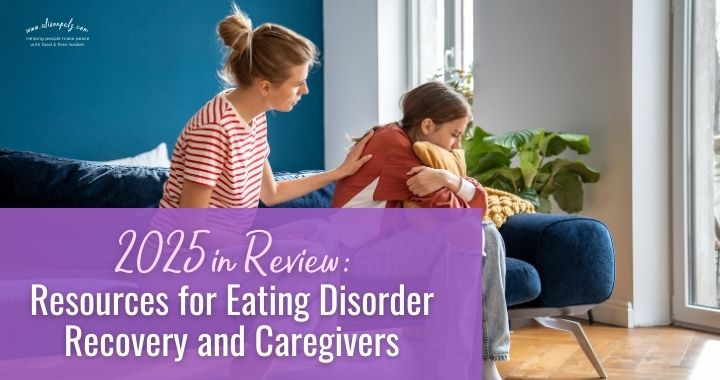
2025 in Review: Resources for Eating Disorder Recovery and Caregivers

2025 in Review: Resources for Eating Disorder Recovery and Caregivers

We’re about to wrap up 2025, so I wanted to take a look back at what I’ve discussed on the blog this year. Every year, different themes emerge, and this year was no different. This year, I focused on providing resources for the support network that often accompanies the individual in eating disorder recovery. We don’t heal in isolation, and the role of parents and caregivers in eating disorder recovery is an important one.

I’m passionate about making research accessible to parents and caregivers to empower families and increase compassion for their loved one who is experiencing the eating disorder. That’s why I focused so much on family-based treatment and validation, as tools in your toolbox to help you and your loved ones navigate eating disorder recovery and our diet obsessed culture.

I hope these posts are helpful to you on your journey to recovery and food peace.

Here’s what I wrote about this year:

Book Review: Binge Eating Disorder: The Journey to Recovery and Beyond is a Must Read

Binge Eating Disorder: The Journey to Recovery and Beyond by Amy Pershing with Chevese Turner, seamlessly blends clinical knowledge with the lived experiences of those affected by BED. It is an invaluable guide for individuals experiencing BED and their families. It is divided into three parts: understanding BED, addressing its root causes, and finding sustainable recovery strategies. This book is a must-read for anyone looking for an insightful and compassionate resource on binge eating disorder (BED).” Read the full review here.

Supporting Your Child Through an Eating Disorder: A Guide for Parents

“Eating disorders are complex, but that doesn’t mean they are unknowable. Education is one of the most powerful tools you have at your disposal, not only to help you find effective methods of support, but also to help expand your understanding of what causes and may impact eating disorders, so you can give informed care to your teen–rather than having to rely on guess work and risk causing harm.

Understanding the nature of eating disorders and their impact on both physical and mental health can demystify the illness and empower you to provide informed support to your teen. Here are some highly recommended resources to deepen your knowledge and help you in supporting your child.” Get the resources here.

The Power of Validation: Supporting Your Child Through Eating Disorder Recovery

“Witnessing your child struggling with an eating disorder can feel overwhelming, confusing, and deeply painful. As a parent, you naturally want to help, but knowing how to respond in the most effective way is not always intuitive. One key tool you can use to support your child’s recovery is validation–understanding what it is, why it matters, and how to practice it can make a world of difference for both your child and your family.” Learn how to use it here.

Sick Enough: A Guide to the Medical Complications of Eating Disorders is a Must-Read

“All people with an eating disorder deserve care and treatment. This is a simple but powerful idea that is reinforced again and again throughout Sick Enough.

Eating disorders affect people’s physical health, not just their mental health. It is important to know how being underfed and undernourished can affect the body. People with bulimia, binge eating, and anorexia can experience these effects. Undernourishment can happen across the weight spectrum. It affects the digestive tract, mood, muscle tone, and much more.

Yes, Gaudiani emphasizes, all who experience eating disorders are “Sick Enough” to warrant treatment.Get the full review here.

Free Workbook for Parents and Caregivers: Supporting Teens with an Eating Disorder

“Validation is not something that you learned from a typical parenting book. In fact it is something that therapists spend endless hours learning about in grad school and practicing with clients.

Because it is so tricky I wanted to provide a resource for caregivers to help learn more and hone their skills in validation–that’s why I created this free validation workbook. This workbook is geared towards parents supporting a teen with anorexia, bulimia or binge eating (not ARFID-that is a whole other workbook-stay tuned!) I hope you find the workbook helpful!” Download the workbook here.

Eating Disorder Recovery: Gain Momentum Over Summer Break

“Summer break, however, offers something the school year rarely does: breathing room. With fewer academic pressures and more control over your schedule, summer can be an opportunity to gain real momentum in your recovery journey. Here’s how you can use this season to refocus, reconnect, and strengthen your foundation for eating disorder recovery.” Get the tips here.

Nourish to Heal: How Eating Enough Supports Binge Eating Recovery

“Eating more will likely help you reduce binge eating. This feels counterintuitive and is certainly not what the weight loss industry or the medical community typically advises, so I know this recommendation can feel very scary.

The weight loss industry provides “tricks” to reduce binge eating, usually focusing on how to limit consumption of certain foods. However, rather than helping navigate binge eating, it often fuels and perpetuates binge eating. Science has taught us that dietary restriction is a risk factor for developing an eating disorder, including binge eating. Dietary restriction also maintains the eating disorder–in other words, a restrictive diet keeps the disorder going.” Here’s why.

Understanding ARFID: More Than Picky Eating

“Avoidant/Restrictive Food Intake Disorder is not just a simple case of picky eating; it is a complex psychological condition that can cause significant nutritional and reduced quality of life, particularly if it endures into adulthood.

Unlike other eating disorders that are often driven by concerns about weight and body image, ARFID is characterized by an avoidance of food based on sensory sensitivity, lack of interest in eating, depressed appetite, and/or fear of adverse consequences such as choking, throwing-up, or an allergic reaction.” Here’s what you should know.

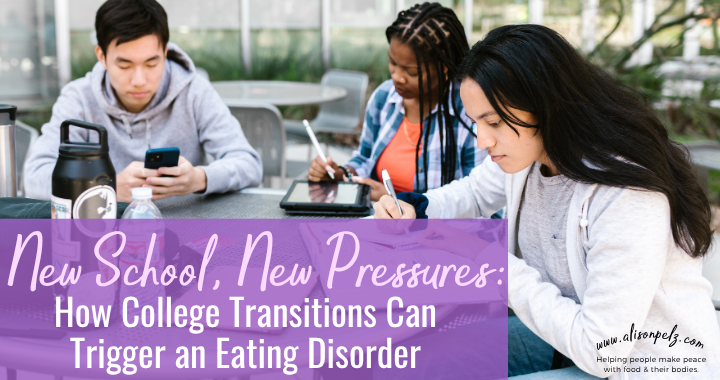
Freshman Year of College: Why Eating Disorders May Start or Reappear

“The first year of college is often described as a thrilling new chapter—freedom, independence, new friends, late-night pizza, dorm life, and so much possibility. For many students, this first year is fun and exciting. But it’s also filled with major transitions—many of which are invisible until you’re in them. And for students with a history of disordered eating, or even those without, the shift can be enough to stir up or intensify existing eating disorders and their symptoms.” This is why–and what you can do about it.

A Note to Parents of Teens with Anorexia Nervosa

“If you’re reading this, chances are you’re scared, confused, and doing everything you can to help your teen who seems to be struggling with anorexia nervosa. Maybe you’ve noticed weight loss, increasing rigidity around food, or a once joyful child who now seems consumed by rules and restrictions. You’ve already tried reasoning, negotiating, and reassuring them, only to be met with resistance, tears, or even silence. You’re not alone—and you’re not to blame.” Read the rest of the note here.

Tackling Healthism in Eating Disorder Recovery

“Healthism is the belief that a person’s moral worth is tied to their health status—and that “health” is something we can fully control through the “right” choices. It often masquerades as wellness advice, clean eating trends, or motivational fitness culture. It’s sneaky. It’s normalized. And it can deeply harm those recovering from disordered eating.” Here’s how you can move beyond it.

Powerful Lived-Experience Stories About Avoidant/Restrictive Food Intake Disorder (ARFID)

“Avoidant/Restrictive Food Intake Disorder (ARFID) is often misunderstood by family members, school personnel and professionals, and sometimes even by the individuals who have ARFID.

Training as a therapist, of course, has been helpful in my work with clients, but listening to people with lived experience has been so powerful. It deepens understanding and builds compassion for oneself and for those around them.” Read the stories here.

I’ll be back with more in 2026! I’ll be writing more about eating disorder recovery, caregiver support, family-based treatment, body image, making peace with food, and navigating weight bias.

If you are in Texas and interested in working with me, click here to fill out a contact form. If there are any topics you want me to cover on the blog next year, let me know! You can send me a message here.

A Note to Parents of Teens with Anorexia Nervosa

A Note to Parents of Teens with Anorexia Nervosa

If you’re reading this, chances are you’re scared, confused, and doing everything you can to help your teen who seems to be struggling with anorexia nervosa. Maybe you’ve noticed weight loss, increasing rigidity around food, or a once joyful child who now seems consumed by rules and restrictions. You’ve already tried reasoning, negotiating, and reassuring them, only to be met with resistance, tears, or even silence. You’re not alone—and you’re not to blame.

Eating Disorders Don’t Happen in a Vacuum

First, let’s clear some things up: eating disorders happen for a variety of reasons, and you did not cause this. Your child is not being difficult or manipulative. Anorexia nervosa is not a choice—it’s a serious mental illness, one that often emerges as a way to cope with overwhelming emotions, stress, or internal distress. While it’s common to want to understand the “why,” we’ve found that what’s often more helpful is understanding the “function” of the eating disorder.

Many teens develop anorexia as a way to regulate their nervous systems. It gives them a false sense of control, numbs emotions, or provides structure during times when life feels chaotic or uncertain. To you, their stressors may look like typical teenage challenges—school pressure, friendships, body changes—but to them, it may feel unmanageable. Anorexia becomes their coping strategy.

The First Priority: Nutrition

It’s completely understandable to want your teen to be motivated to recover. That desire is beautiful—and sometimes, they do. But more often than not, especially early on, they don’t. That’s because the eating disorder is serving a function that feels protective, even comforting. This is why insight is often low, particularly in the early stages. Your teen likely does not recognize the danger they’re in.

But as a parent, you must.

Malnutrition affects every system in the body—heart, bones, hormones, digestive system, and most importantly, the brain. When the brain is undernourished, it struggles to think clearly, manage emotions, and perceive risk. That means your child may not recognize how sick they are—or even that they’re sick at all. In this light, food is not just fuel—it’s medicine. Without nutritional rehabilitation, anorexia becomes more dangerous and more entrenched. Left untreated, it can be fatal.

Supporting Your Teen: Think “Food First, Life Second”

Your role as a parent is critical—and powerful. You don’t have to wait until your teen agrees there’s a problem. In fact, waiting can lead to more severe illness. Instead, treat this the way you would treat any other safety concern. If your child was struggling to breathe, you wouldn’t wait until they acknowledged the problem—you’d act. Anorexia nervosa requires the same kind of decisive care.

So what does that look like?

  • Offer three meals and three snacks a day. These should be complete, nourishing meals designed to support weight restoration and healing—not what your teen requests or feels “safe” eating. (Remember, the eating disorder is often dictating their choices right now.)
  • Before starting nutrition rehabilitation process, first get a full medical workup from your teens doctor, as they may be at risk for refeeding syndrome, which can be life-threatening.
  • Sit with them while they eat. This isn’t just about supervision—it’s about support. Offer to distract them if they’d like—scroll through social media together, play a card game, or watch a show. Distraction can be a helpful tool.
  • Validate, validate, validate. Acknowledge how hard this is. Say things like, “I know this is scary,” or “I can see how uncomfortable this feels.” Your calm, steady presence will help more than you know.

You’ve probably already tried to help your child eat more and have been met with pushback. That’s normal. Remember, the eating disorder is helping them cope, and asking them to let go of it—especially before they’ve learned other ways to regulate—is asking a lot. But with nourishment, the brain begins to heal. With nourishment, new coping strategies become possible.

You’re Not Alone

Recovery from anorexia is hard—but it’s possible. And no one should do it alone. Reach out to treatment professionals who understand eating disorders, and look for support groups for families walking the same path. Family-Based Therapy (FBT) is designed to support you as you support your teen.

Above all, remember this: your love is not enough to cure anorexia, but it is the foundation on which recovery is built. You can be firm and compassionate. And set boundaries and offer comfort. You can lead your teen through something they don’t yet want to leave behind.

You’re not failing. You’re fighting for your child’s life. And that matters more than anything else.

This article is meant to be educational about anoerxia nervosa, but it does not suffice as treatment. If you think your teen has an eating disorder, please seek a medical evaluation from your teen’s doctor. 

If you would like to connect about how I work with families, feel free to schedule a consultation here. 

Freshman Year of College Why Eating Disorders May Start or Reappear

Freshman Year of College: Why Eating Disorders May Start or Reappear

The first year of college is often described as a thrilling new chapter—freedom, independence, new friends, late-night pizza, dorm life, and so much possibility. For many students, this first year is fun and exciting. But it’s also filled with major transitions—many of which are invisible until you’re in them. And for students with a history of disordered eating, or even those without, the shift can be enough to stir up or intensify existing eating disorders and their symptoms.

The Perfect Storm of Change

Think about the months, even years, leading up to college: there’s pressure to get in, choose the “right” school, imagine your dream experience, and count down to this next life stage. Students often hear, “These will be the best years of your life.” That narrative leaves little room for the complicated, and very real, emotional reality of freshman year.

Starting college means stepping away from nearly everything that has felt familiar. Students leave behind the structure of high school, the predictability of home, their longstanding support systems, routines, and even the foods they’re used to eating. Meals in college are different—not just the food, but the context: dining halls, roommates watching what you eat, lack of privacy, food availability at odd hours. Schedules shift. Sleep is often disrupted. Social dynamics become more fluid and uncertain.

Our nervous systems thrive on predictability. When that predictability disappears, our bodies and brains notice.

Nervous Systems Don’t Just “Adjust”

The human nervous system is designed to keep us safe and regulated. When life feels overwhelming or uncertain, the body often reaches for something to regain a sense of control or grounding. For some students, that might be diving into academics or social life. For others—especially those with a history of disordered eating—old symptoms may resurface as a way to self-soothe, manage anxiety, or feel a sense of mastery in a suddenly unpredictable environment.

Even for students who have never struggled with an eating disorder before, the stress of transition can be enough to tip the scale. Eating disorders aren’t really about food. They are adaptive responses to stress, trauma, and dysregulation. And while they may seem counterproductive from the outside, they often serve a protective function—numbing overwhelming feelings, offering structure, or creating a sense of control.

When the Fun and the Stress Coexist

It’s important to recognize that freshman year doesn’t have to be miserable for it to be dysregulating. Students (and parents) are often surprised that eating disorder behaviors emerge during what appears to be a “good” year. It’s a common misconception that if a student is socializing, attending classes, or even enjoying college, they must be doing fine. But excitement and stress can coexist. A student might love their college experience and still be struggling silently with food or body image.

What can college students and families do?

  • Normalize the complexity of transitioning to college. Including feelings of worry, fear, and isolation. 
  • Check in with yourself or your college student about disruptions to routine, the changes in eating patterns, and the emotional rollercoaster of being away from home.
  • Support emotional regulation strategies beyond food and body control—like mindfulness, journaling, movement, and connecting with others.
  • Encourage care, especially for students with a history of an eating disorder. Ongoing therapy or nutrition support through telehealth can make a significant difference.
  • Watch for warning signs that may get masked by the “college is fun” narrative—changes in weight, food rituals, isolation, or excessive focus on body image.
  • Reinforce that relapse is not failure, but a signal from the nervous system that something is overwhelming. It’s an invitation for support, not shame.

Final Thoughts

Freshman year is a season of growth, challenge, and self-discovery. It’s normal for it to feel both exciting and hard. When we understand the nervous system’s role in regulation—and how eating disorders often function as misguided coping tools—it becomes easier to see why symptoms might arise or return during this time.

By naming these challenges openly, we can help students and families feel less blindsided—and offer the compassionate, proactive support that helps them not just survive freshman year, but move through it with resilience.

If you would like to know more about how I work with families and college students with eating disorders, please feel free to contact me.

Understanding ARFID: More Than Picky Eating

Understanding ARFID: More Than Picky Eating

Avoidant/Restrictive Food Intake Disorder (ARFID) often remains underrecognized and misunderstood.

Adults who have struggled with Avoidant/Restrictive Food Intake Disorder for most of their life may feel it is impossible for things to be different. Parents who have a child struggling with ARFID have, more often than not, literally tried everything to help their kiddo eat, but nothing seems to be working. ARFID is complex, it isn’t simple “picking eating”.

Although ARFID is a newer diagnosis, there is nothing new about it.

Prior to being added to the DSM-5, it was included in a broader category called “Feeding Disorder.” It was added to the DSM-5 in order to develop better ways to treat it.

Parenting a Child with ARFID

If you are a parent, well-meaning doctors may have minimized your child’s selective eating. This can be particularly true if your child is on track with growth. This can be frustrating for a number of reasons. You spend significant time to figure out how to feed your child – and it takes a lot of mental energy and often can feel very limiting to keep dealing with this challenge day after day.

Nutritional deficits can impact both physical health and emotional well-being, which is why early detection of ARFID is important–so it doesn’t turn into a life-long struggle. Understanding ARFID is crucial for effective intervention, and a comprehensive treatment strategy tailored to the individual’s specific needs is necessary.

Understanding ARFID

Avoidant/Restrictive Food Intake Disorder is not just a simple case of picky eating; it is a complex psychological condition that can cause significant nutritional and reduced quality of life, particularly if it endures into adulthood.

Unlike other eating disorders that are often driven by concerns about weight and body image, ARFID is characterized by an avoidance of food based on sensory sensitivity, lack of interest in eating, depressed appetite, and/or fear of adverse consequences such as choking, throwing-up, or an allergic reaction.

Individuals grappling with ARFID may face a persistent difficulty when it comes to eating sufficient quantities or varieties of food. This can stem from deep-seated anxiety, gastrointestinal discomfort, or past negative associations with food.

Recognizing Avoidant/Restrictive Food Intake Disorder Symptoms

Persistent avoidance of specific foods or food groups or low food intake are characteristic of ARFID. Physical responses such as gagging may coincide with this avoidance of certain foods.

The eating patterns of individuals with ARFID reveal a restrictive intake that fails to meet their physiological needs. Without treatment, ARFID can lead to potential nutritional deficiencies, weight loss, or developmental delays, irrespective of age, gender, or body weight.

Behavioral signs and changes in eating that may indicate ARFID include:

  • Poor appetite
  • Getting full quickly
  • Avoiding eating due to fear of choking
  • Picky eating that often gets worse over time

Avoidant Restrictive Food Intake Disorder (ARFID) is often misinterpreted as a phase among children or as mere pickiness in adults; however, it represents a significant feeding or eating disorder that hinders one’s capacity to consume an adequate variety and volume of food.

Impact of ARFID on Everyday Life

ARFID’s restrictive eating patterns in children can lead to low energy, isolation, and anxiety around meal times. For caregivers, it can be a struggle to know how to feed your child, or  it can take lots of effort to prepare foods that you know they will eat in order to support growth.

For older children and adolescents, ARFID can make socializing, which often happens around food (such as parties, sleep overs, family events or team dinners), anxiety provoking for both the child and parents. The disorder’s consequences radiate outward, often simmering into familial tensions and social rifts, as loved ones grapple with the complexities of ARFID.

Adults with ARFID tend to have a decrease in quality of life. Moreover, the fear of eating outside one’s comfort zone can hinder personal and professional growth, particularly when mealtime activities are involved.

Ultimately, the disorder’s grasp can dampen overall quality of life, exerting a significant emotional toll.

Approaches to Treating ARFID

The main goal of treatment for ARFID is supporting the sufferer with eating enough (and enough variety) to keep their body nourished. For children, treatment works to support growth. Treatment for children, adolescents, and adults can help to improve overall quality of life.

Improved quality of life looks different depending on the individual with ARFID. For some, that may mean eating most food. For others, it may mean expanding the variety of food just a bit to improve nutrition and make eating easier.

Avoidant/Restrictive Food Intake Disorder treatment usually focuses on making eating or feeding a priority.

That is, for most folks, increasing the number of times each day they eat meals and snacks. Due to the nature of ARFID, eating often gets put off because it is uncomfortable for the person to eat, or they simply aren’t hungry.

Structured meal planning can be an effective strategy for managing ARFID, as it introduces routine and predictability into the dining experience. By brainstorming menus in advance, individuals and families gain clarity and a sense of control over their food choices.

Having structure and making eating a priority can help make sure people are getting adequate nutrition and reduce mealtime stress.

In addressing the dietary concerns that stem from Avoidant/Restrictive Food Intake Disorder, we take a gradual approach to food exposure. Food exposures are designed in collaboration with the client and/or the family in order to personalize care.

Incremental exposure to food means starting with foods that are less anxiety-provoking, and building up to a more diverse diet over time. Food-related anxieties can be deconstructed, facilitating the individual’s encounters with previously feared foods in a safe and controlled environment. While some foods may never feel safe or comfortable for the person to eat.

Efforts are channeled into ensuring balanced nutritional intake while concurrently addressing emotional and cognitive barriers. Over time, the individual learns to associate eating with safety rather than distress, thus gradually dismantling the cycle of avoidance that characterizes ARFID.

My Approach to ARFID Treatment

When I am working with children with ARFID I work closely with their caregivers. I have learned from my training in Cognitive-Behavioral Therapy for ARFID that I can bring the expertise in eating disorders, and the parents & kiddo bring the expertise on their family, food beliefs, culture, and abilities (to name a few).

With adults with ARFID I use a similar mindset. I bring skills to the table to treat the eating disorder and they bring their expert knowledge of themselves.

Are you concerned that you or your child are dealing with Avoidant/Restrictive Food Intake Disorder? Sign up for a free consultation to learn more about how I can help you and your family.

Free Workbook for Parents and Caregivers: Supporting Teens with an Eating Disorder

In March I wrote a blog post about validation and how it can be used to support your teen in their recovery from their eating disorder.

Validation stuff is tricky. Take it from me. I am a parent and a trained therapist and sometimes I still get it wrong.

And it is still worth pursuing.

Validation is not something that you learned from a typical parenting book.

In fact it is something that therapists spend endless hours learning about in grad school and practicing with clients.

Because it is so tricky I wanted to provide a resource for caregivers to help learn more and hone their skills in validation–that’s why I created this free validation workbook. This workbook is geared towards parents supporting a teen with anorexia, bulimia or binge eating (not ARFID-that is a whole other workbook-stay tuned!) I hope you find the workbook helpful!

Quick recap why validation is important:

  • It fosters trust
  • Helps regulate your teens nervous system be feeling seen and heard
  • A regulated nervous system allows your teen to engage in problem solving
  • And as a parent you may notice that it helps you feel calm!

Grab the Free Workbook for Parents and Caregivers Supporting Teens with an Eating Disorder here!

Schedule your free 20 minute consultation here.