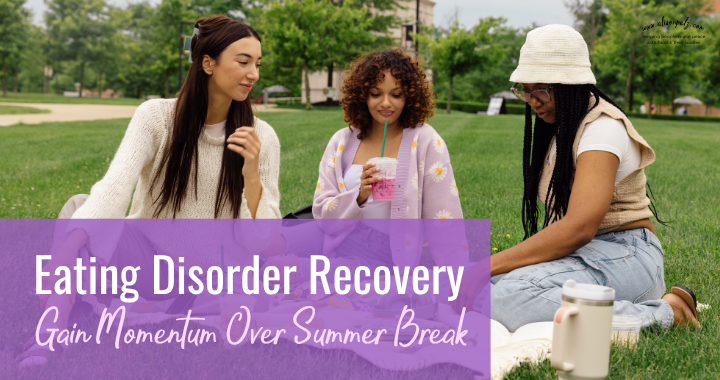
For college students working towards eating disorder recovery, during the school year can feel like a constant balancing act. Between deadlines, exams, social stressors, and navigating independence, there’s often little space left for the deep emotional work that recovery requires. You may have found yourself just trying to stay afloat—doing your best to maintain stability, but without the time or energy to develop new skills that support long-term recovery.
Summer break, however, offers something the school year rarely does: breathing room. With fewer academic pressures and more control over your schedule, summer can be an opportunity to gain real momentum in your recovery journey. Here’s how you can use this season to refocus, reconnect, and strengthen your foundation for eating disorder recovery.
1. Re-Engage With Your Eating Disorder Treatment Team
If you’ve had to scale back on therapy or nutrition sessions during the semester, summer is the time to plug back in. Reach out to your treatment team—therapist, dietitian, physician—and schedule regular appointments. Even a few months of more consistent support can create noticeable progress.
If you’ve been away from care altogether, summer is a great time to re-establish those connections or seek out new providers who can help you move forward. Virtual care has made this more accessible than ever, whether you’re at home, traveling, or staying on campus.
This could also mean considering a more intensive level of care, such as a partial hospitalization program (PHP) or intensive outpatient program (IOP). These structured treatment options—often called “day treatment”—can be an incredibly effective way to reinvigorate your recovery. With daily therapeutic support and a more contained environment, you can focus deeply on healing without the academic stress that might otherwise get in the way.
2. Learn (or Re-Learn) Coping Skills
It’s completely normal to feel too emotionally taxed during the school year to take on new coping strategies. That doesn’t mean you’ve failed—it means you were human in a high-stress environment. Summer gives you the bandwidth to revisit or discover skills that actually help regulate your nervous system and reduce the urge to rely on disordered behaviors.
Here are a few to explore:
💬 Connection with Others
Recovery can feel isolating, and sometimes shame convinces us we’re better off alone. But notice this: What happens when you simply connect with someone—a friend, a family member, even a kind stranger? Does your anxiety dip, even a little? Human connection is powerful. It doesn’t need to be deep or intense to be healing. A short walk with a friend, a phone call or text exchange, or a shared laugh can ground you and remind your brain that you are safe.
🌳 Spending Time in Nature
Nature has a unique way of soothing the nervous system. Research shows that even short periods outdoors—walking through a park, sitting near water, or lying in the grass—can reduce stress hormones and improve mood. The natural world invites presence, which is often the opposite of the chaos and noise that feed disordered thoughts.
Try noticing the small things: the sound of wind in the trees, the feel of sunlight on your skin, the rhythm of your footsteps on a trail. These aren’t distractions—they’re grounding tools that help rewire your stress response over time.
✍️ Journaling and Self-Reflection
Without the constant stream of assignments and obligations, you may find space for reflection. Journaling can help you process emotions, track your recovery progress, or simply notice patterns in how you’re feeling. You don’t need to write every day or follow a strict structure. Even jotting down a few thoughts each week can increase self-awareness and offer insight into what’s helping (or hurting) your recovery.
3. Give Yourself Permission to Slow Down
Recovery isn’t just about doing more. Sometimes the biggest breakthroughs come when you give yourself permission to rest. Summer may feel like the time you “should” be catching up or making huge leaps—but remember, slowing down can be the leap.
Ask yourself:
- What pace feels sustainable to me?
- Where can I offer myself compassion rather than pressure?
- What kind of support do I need to keep moving forward gently?
4. Plan for the Fall—Without the Pressure
Toward the end of summer, consider how to carry your progress into the school year. Maybe that means scheduling therapy sessions ahead of time, setting boundaries around school-life balance, or identifying support systems on campus.
You don’t need to have it all figured out—but having a loose plan can prevent you from feeling like you’re starting from scratch once classes resume.
Final Thoughts on Eating Disorder Recovery
Recovery during the academic year can be a slow climb—but summer offers the chance to catch your breath, look around, and notice how far you’ve come. This season isn’t about perfection. It’s about presence, curiosity, and gently returning to the practices and people that help you heal.
Use this time to reconnect—with your team, your tools, your community, and yourself.