Tag Archives: eating disorders
Mindfulness in Eating Disorder Recovery
When people hear the word mindfulness often what comes to mind is a person sitting cross-legged, with a far out look on their face repeating mantras with incense burning. Some people may practice mindfulness in this way, but I think for most of us it can be a lot simpler than that.
In my last blog post A Case for Canning Your Diet I shared results of a recent study that showed that a non-dieting approach to eating and mindful eating can help reduce the symptoms of an eating disorder. I discussed the non-dieting approach in A Case for Canning Your Diet and in this post I am going to discuss the second component of the study intervention–mindfulness.
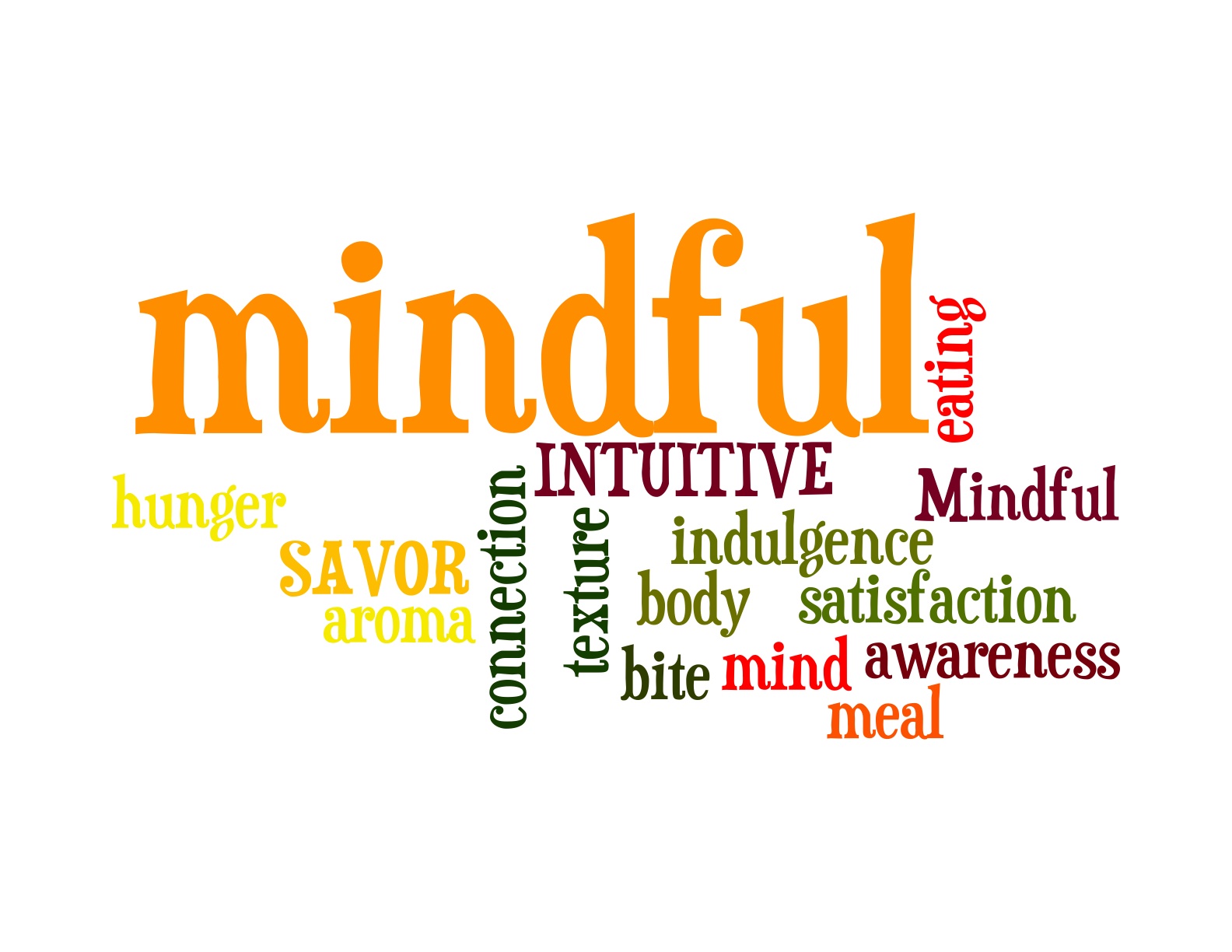
What is mindfulness? Mindfulness in it’s simplest form it is focusing attention on one thing. Words that my be used as synonym for mindfulness include purposeful awareness, focus, concentration, sustained attention, presence, staying in the moment, observation and neutral observer. *
Why practice mindfulness? It increases the probability of new behaviors by creating and stabilizing new brain circuits. Mindfulness can change your brain. It helps us get freed from reactivity, habitual thoughts and negative habits.
How does mindfulness help with eating problems and/or eating disorders?
- It reduces anxiety and stress (Often a trigger for overeating or disordered eating behaviors).
- Mindfulness can improve mood (Again often a trigger.).
- Allows for pause. Helps to reduce impulsivity, often this can help us make a different and/or more positive choice.
Tips to practice mindful eating:
- Eat distraction free as possible. Often we are multitasking when we eat-on our devices, watching TV, driving, working or studying.
- Before eating notice the colors, shapes, smells, etc. of the food on your plate.
- Slow down when eating. Chew your food several times. Put your fork down on the plate between bites.
- Notice how the food tastes in your mouth. Ask yourself what you like about your meal and what you don’t like about your meal.
- Every so often stop eating and take a few breaths and notice what is around you.
There is no wrong or right way to practice mindful eating and it is normal to get distracted or lost in your thoughts. Part of the practice of mindfulness is noticing when you get off track and refocusing yourself .
What I have noticed in my personal experience with mindfulness is that it brings a lot more clarity and joy to my everyday life. And, hey, who couldn’t use a little more of that?
*From the seminar “Mindfulness Strategies for Changing the Brain-Tools for Rewiring Depression, Anxiety & Toxic Lifestyle Habits”. Presenter and author Donald Altman, MA, LPC.
Eight Ways to Reduce Food and Weight Obsession
 In my post “Food on Your Mind Much (Always)?” I defined the term food preoccupation or obsession as excessively worrying about food, calories, grams of carbohydrate or fat, etc. Thinking about food on a daily basis is normal, but worrying or obsessing about food much of the time is not. For more details about food preoccupation please read my post “Food on Your Mind Much (Always)?”.
People with eating disorders or who chronically diet tend to have food preoccupation. Part of the recovery process from an eating disorder and other eating problems whether it is anorexia nervosa, bulimia nervosa, binge eating or compulsive overeating is working to reduce food preoccupation.
Here are some tips to reduce food preoccupation:
1. The first step is to notice when and how often you worry about food, calories, weight, etc. Notice thoughts rather than CRITICIZE thoughts about food. If we beat ourselves up about stuff it just keeps us stuck, but we are able to problem solve and move forward if we accept ourselves .
2. Ask yourself some of the following questions:
What purpose does excessively thinking about food/weight serve me?
Am I really in more control (of my life or my weight) by thinking about food/weight so much?
What things am I avoiding by spending so much time worrying about food? Often times people will focus on food rather than think about painful situations or feelings, to soothe anxiety or stress, to relieve boredom or procrastination, etc.
What am I missing out on (For example friends, family, hobbies, occupation, school, etc.) by spending so much time thinking about food?
What am I afraid is going to happen if I stop obsessing about food?
Learning more about your particular circumstances around food preoccupation may help you challenge some of your worry about food and weight.
3. When you notice yourself obsessing or worrying about food, dieting or your body:
Simply say “stop” or “halt” to those thoughts and think about something else.
Write out a pros/cons list of worrying about food.
Offer yourself reassurance that decreasing your thoughts about food is OK after all it really hasn’t helped with eating problems, most likely it is making your food problems worse.
4. Make sure you are eating enough food regularly throughout the day. Regularly skipping meals and snack or chronic under eating can contribute to increased food preoccupation.
5. Schedule time to worry about food. For example, promise yourself that between 9am-9:30am daily you can worry about food and stick to it.
6. Reduce time reading about dieting, food and exercise. You may subscribe to magazines or newsletters or spend a large amounts of time on the internet reading about food, weight, etc. which may only exacerbate the food worry.
7. Reduce the amount of time talking about food, weight/shape and dieting.
8. Consulting a counselor often helps reduce food preoccupation. A counselor can help work to reduce the underlying causes of your food/weight worry.
Three of My Favorite Books
I have included a few of my favorite reads here for people who want to get off the diet roller coaster. These resources offer a new perspective on how to approach food and weight. They offer no quick fixes or “magic bullets”, but rather an exciting new way to look at food and weight.Studies have shown reading (or “bibliotherapy” as us counselors call it) can be an effective tool to augment treatment for compulsive overeating, bulimia nervosa and binge eating disorder.
Happy reading!!!
 Intuitive Eating by Evelyn Tribole, MS, RD and Elyse Resch, MS, RD, FADA
This is a wonderful book. Tribole and Resch share with readers how to give up dieting for good, listen to their body for hunger and fullness cues and legalize all foods. It is a must read!

Health at Every Size by Linda Bacon, PhD
I have heard great things about this book. I have not yet read this book (It is on my list.), but I have had the privilege of hearing Dr. Bacon speak at a professional conference. She presented compelling information about body weight. Bacon indicates that weight plays a much less important role in health than the media and health care providers lead us to believe. Bacon teaches readers how to keep themselves healthy despite body weight.
 When Women Stop Hating their Bodies by Jane R. Hirschmann & Carol H. Munter.
The title says it all. This is a very empowering book!