We’re about to wrap up 2025, so I wanted to take a look back at what I’ve discussed on the blog this year. Every year, different themes emerge, and this year was no different. This year, I focused on providing resources for the support network that often accompanies the individual in eating disorder recovery. We don’t heal in isolation, and the role of parents and caregivers in eating disorder recovery is an important one.
I’m passionate about making research accessible to parents and caregivers to empower families and increase compassion for their loved one who is experiencing the eating disorder. That’s why I focused so much on family-based treatment and validation, as tools in your toolbox to help you and your loved ones navigate eating disorder recovery and our diet obsessed culture.
I hope these posts are helpful to you on your journey to recovery and food peace.
Here’s what I wrote about this year:
“Binge Eating Disorder: The Journey to Recovery and Beyond by Amy Pershing with Chevese Turner, seamlessly blends clinical knowledge with the lived experiences of those affected by BED. It is an invaluable guide for individuals experiencing BED and their families. It is divided into three parts: understanding BED, addressing its root causes, and finding sustainable recovery strategies. This book is a must-read for anyone looking for an insightful and compassionate resource on binge eating disorder (BED).” Read the full review here.
“Eating disorders are complex, but that doesn’t mean they are unknowable. Education is one of the most powerful tools you have at your disposal, not only to help you find effective methods of support, but also to help expand your understanding of what causes and may impact eating disorders, so you can give informed care to your teen–rather than having to rely on guess work and risk causing harm.
Understanding the nature of eating disorders and their impact on both physical and mental health can demystify the illness and empower you to provide informed support to your teen. Here are some highly recommended resources to deepen your knowledge and help you in supporting your child.” Get the resources here.
“Witnessing your child struggling with an eating disorder can feel overwhelming, confusing, and deeply painful. As a parent, you naturally want to help, but knowing how to respond in the most effective way is not always intuitive. One key tool you can use to support your child’s recovery is validation–understanding what it is, why it matters, and how to practice it can make a world of difference for both your child and your family.” Learn how to use it here.
“All people with an eating disorder deserve care and treatment. This is a simple but powerful idea that is reinforced again and again throughout Sick Enough.
Eating disorders affect people’s physical health, not just their mental health. It is important to know how being underfed and undernourished can affect the body. People with bulimia, binge eating, and anorexia can experience these effects. Undernourishment can happen across the weight spectrum. It affects the digestive tract, mood, muscle tone, and much more.
Yes, Gaudiani emphasizes, all who experience eating disorders are “Sick Enough” to warrant treatment.” Get the full review here.
“Validation is not something that you learned from a typical parenting book. In fact it is something that therapists spend endless hours learning about in grad school and practicing with clients.
Because it is so tricky I wanted to provide a resource for caregivers to help learn more and hone their skills in validation–that’s why I created this free validation workbook. This workbook is geared towards parents supporting a teen with anorexia, bulimia or binge eating (not ARFID-that is a whole other workbook-stay tuned!) I hope you find the workbook helpful!” Download the workbook here.
“Summer break, however, offers something the school year rarely does: breathing room. With fewer academic pressures and more control over your schedule, summer can be an opportunity to gain real momentum in your recovery journey. Here’s how you can use this season to refocus, reconnect, and strengthen your foundation for eating disorder recovery.” Get the tips here.
“Eating more will likely help you reduce binge eating. This feels counterintuitive and is certainly not what the weight loss industry or the medical community typically advises, so I know this recommendation can feel very scary.
The weight loss industry provides “tricks” to reduce binge eating, usually focusing on how to limit consumption of certain foods. However, rather than helping navigate binge eating, it often fuels and perpetuates binge eating. Science has taught us that dietary restriction is a risk factor for developing an eating disorder, including binge eating. Dietary restriction also maintains the eating disorder–in other words, a restrictive diet keeps the disorder going.” Here’s why.
“Avoidant/Restrictive Food Intake Disorder is not just a simple case of picky eating; it is a complex psychological condition that can cause significant nutritional and reduced quality of life, particularly if it endures into adulthood.
Unlike other eating disorders that are often driven by concerns about weight and body image, ARFID is characterized by an avoidance of food based on sensory sensitivity, lack of interest in eating, depressed appetite, and/or fear of adverse consequences such as choking, throwing-up, or an allergic reaction.” Here’s what you should know.
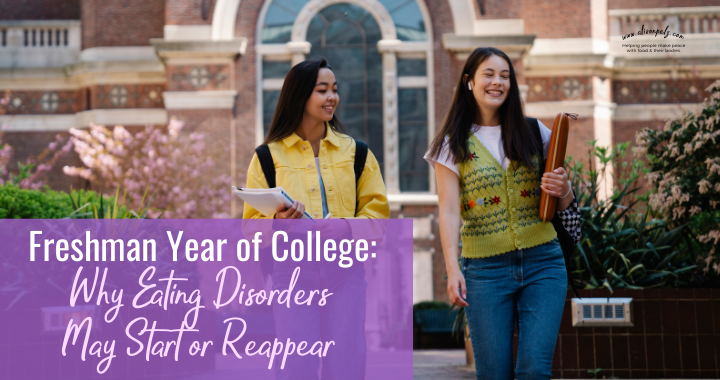
“The first year of college is often described as a thrilling new chapter—freedom, independence, new friends, late-night pizza, dorm life, and so much possibility. For many students, this first year is fun and exciting. But it’s also filled with major transitions—many of which are invisible until you’re in them. And for students with a history of disordered eating, or even those without, the shift can be enough to stir up or intensify existing eating disorders and their symptoms.” This is why–and what you can do about it.
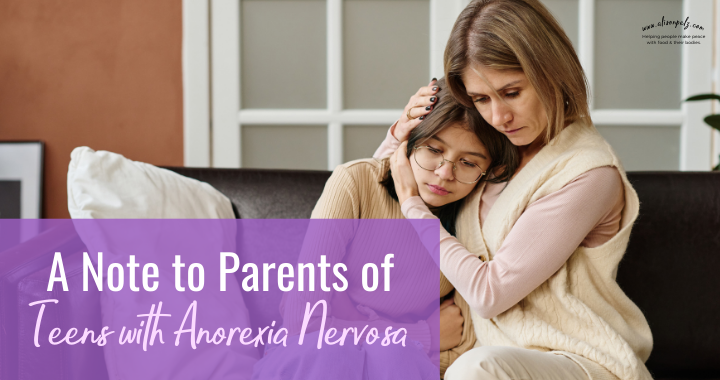
“If you’re reading this, chances are you’re scared, confused, and doing everything you can to help your teen who seems to be struggling with anorexia nervosa. Maybe you’ve noticed weight loss, increasing rigidity around food, or a once joyful child who now seems consumed by rules and restrictions. You’ve already tried reasoning, negotiating, and reassuring them, only to be met with resistance, tears, or even silence. You’re not alone—and you’re not to blame.” Read the rest of the note here.
“Healthism is the belief that a person’s moral worth is tied to their health status—and that “health” is something we can fully control through the “right” choices. It often masquerades as wellness advice, clean eating trends, or motivational fitness culture. It’s sneaky. It’s normalized. And it can deeply harm those recovering from disordered eating.” Here’s how you can move beyond it.
“Avoidant/Restrictive Food Intake Disorder (ARFID) is often misunderstood by family members, school personnel and professionals, and sometimes even by the individuals who have ARFID.
Training as a therapist, of course, has been helpful in my work with clients, but listening to people with lived experience has been so powerful. It deepens understanding and builds compassion for oneself and for those around them.” Read the stories here.
I’ll be back with more in 2026! I’ll be writing more about eating disorder recovery, caregiver support, family-based treatment, body image, making peace with food, and navigating weight bias.
If you are in Texas and interested in working with me, click here to fill out a contact form. If there are any topics you want me to cover on the blog next year, let me know! You can send me a message here.